
URBAN FOREST
Mundhwa, Pune · 14 acres · Completed
From a degraded urban site to a thriving ecosystem
This site had remained vacant for several years and, over the years, had become a dumping ground for the neighbourhood. Plastic, construction debris, rubber, glass and other waste had accumulated across the land, while an open sewage channel cut through the site. What remained was a severely degraded landscape with little visible life. When the opportunity arose to transform the site, the intention was not to create a conventional landscaped open space, but to establish an urban forest, a landscape capable of developing its own ecological relationships over time. The design was therefore approached as an exercise in creating habitats rather than only planting trees. Different parts of the site were conceived as distinct but interconnected landscapes, including a devrai, a food forest, a wetland and an urban forest.

Site photos from before the project started in 2022
Designing for Ecology
The landscape was planned to support different layers of vegetation and the life associated with them.
How do you invite life onto a barren site?
The urban forest includes areas conceived as deciduous forest, scrub forest and Ficus plantation. Upper canopy, understorey and ground layers create different conditions for insects, amphibians, birds and other forms of life. Large mounds on a flat site help create microhabitats. On the slopes, stone bunds and contour trenches help slow runoff, conserve water and reduce soil erosion. Seasonal ponds create additional habitat while allowing monsoon water to be retained within the site. The wetland uses aquatic and edge vegetation to help address polluted water, while the food forest combines trees, shrubs and ground layers to create a productive habitat for both people and wildlife.

Plot no.2

Plantation work on Plot no.1


Plot 1

Cleaning in polluted stream Plot no. 3

Attempt at remediating polluted water using plants, partially successful

Map showing location of plots

During first monsoon

Mound made using stone and existing black cotton soil


The first residents
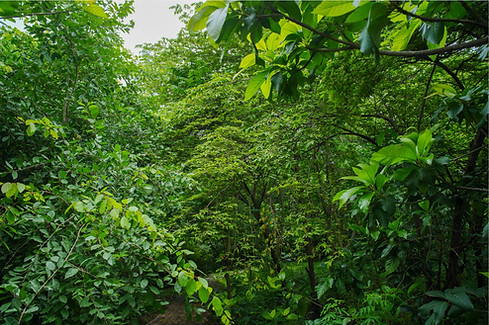

Progress after 4 years


Biodiversity on site
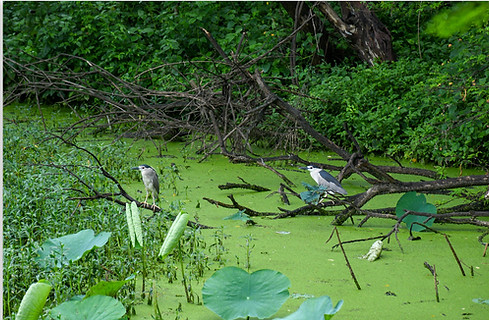

Biodiversity on site
A landscape that is ever evolving
The project was designed and executed within a very tight window to take advantage of the monsoon. Planting began in May, with saplings between 2 and 5 feet. Mulching and organic amendments were used to help establish the landscape through its first season. No soil was brought in from outside, as introducing soil from another ecosystem was considered contrary to the ecological principles of the project.
After the first monsoon, insects and bird species that had not previously been observed began appearing on the site, while the trees established and began to branch. The landscape was expected to continue developing significantly over the following years. Four years on, regeneration has begun. The trees have increased in girth, leaf litter has begun to turn to humus, the soil looks and smells richer, and the site feels cooler. There is nesting, movement of insects in large numbers, and bird song.