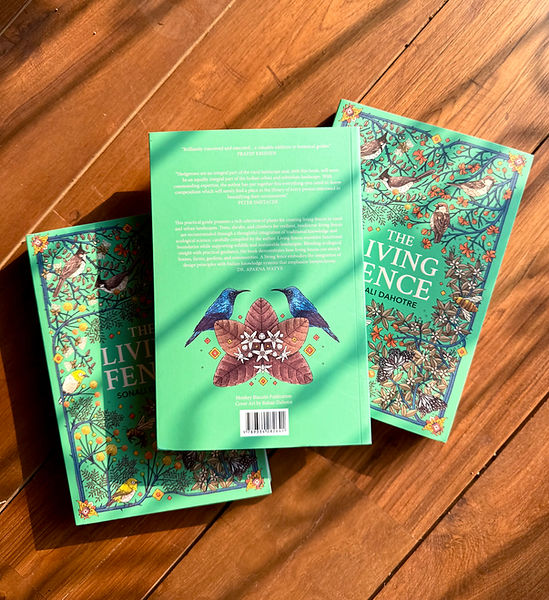
The Living Fence
The ecology of living boundaries
Boundaries, in nature as in design, are thresholds. They can separate, but they can also connect. How we treat our boundaries is a direct reflection of our relationship with our surroundings, whether we choose to include them or cut them off.
The Living Fence explores this idea through a simple, very old form of boundary: the living fence. Unlike a wall, a living fence is not simply a line of separation; it is a porous edge, a place where plants, insects, birds, people and the larger landscape can interact.

Over 250 plants documented across India

Documentation showing the ecological and economic value of the plants

Reviews and recognition
"Brilliantly conceived and executed ... a valuable addition to botanical guides"
Pradip Krishen
"Hedgerows are an integral part of the rural landscape and, with this book, will soon be an equally integral part of the Indian urban and suburban landscape. With commanding expertise, the author has put together this everything-you-need-to-know compendium which will surely find a place in the library of every person interested in beautifying their environment"
Peter Smetacek
"The Living Fence by landscape architect Sonali Dahotre is truly a delightful book that shows how to transform a garden, farm, or any piece of land into a thriving habitat through the creation of living fences. The author presents an impressive selection of over 250 plant species that not only provide natural protection and boundaries but also attract birds, bees, butterflies, bats, and countless other forms of wildlife, creating vibrant ecosystems around the land.
This remarkable work will serve as an invaluable guide for landscape designers, architects, horticulturists, and amateur gardeners alike, inspiring them to bring the land back to life. Significantly, this is the first Indian book dedicated exclusively to living fences for Indian landscapes, making it a pioneering contribution to ecological landscaping in the country.
One of the book's greatest strengths is the way it encourages readers to see living fences not merely as boundaries but as living habitats that support birds, butterflies, bees, and many other components of biodiversity. The book is well illustrated, making plant identification easy for both professionals and enthusiasts.
I am confident that this splendid work will soon become an essential resource for landscape architects, horticulturists, conservationists, serious gardeners, naturalists, biologists, and all those engaged in ecological restoration and sustainable land management"
Isaac Kehimkar